¡Presente! Padre Marcelo Pérez Pérez 1974-2024

On Sunday, October 20, 2024 Padre Marcelo Pérez, a beloved priest in Chiapas, was assassinated. Padre Marcelo had just given mass in Barrio Cuxtitali in San Cristóbal de Las Casas when two men on a motorcycle shot him as he was getting into his truck to leave. Padre Marcelo was the first indigenous priest in Chiapas and dedicated his life to the defense of the original peoples of his state and to all people seeking peace with justice. The Catholic Diocese had to move Padre Marcelo from one municipality to another to protect him against frequent death threats from criminal organizations. He stood up against the drug cartels and spoke out alongside his brothers and sisters against the ill-fated rural cities project of the Jaime Sabines government.

Padre Marcelo first arrived in Chenalho’ in 2001 where he became like a brother to the women and their families of three weaving collectives with which I work in Chenalho’.

The internet is full of articles about Padre Marcelo’s assassination. Below are links to organizations that will keep you informed about the courageous efforts of individuals and communities in Chiapas to defend themselves and their territories against increasing threats from criminal organizations:

· the website of the Fray Bartolomé de Las Casas Human Rights Center – https://www.frayba.org.mx
· the website of Schools for Chiapas
https://schoolsforchiapas.org
· the website of Las Abejas https://www.acteal.org
· and the websites of the EZLN https://www.ezln.org.mx
and https://enlacezapatista.ezln.org.mx/

Filmmaker, Bill Jungels, conducted an interview with Padre Marcelo about the rural cities project as part of the documentary, “Maya Faces in a Smoking Mirror.” This film is available in its entirety on YouTube and is presented on this website on the “About” page.

Crystal Massey took the photo above of Padre Marcelo at a baptism in Chixiltón, Chenalho’ of the child of two of our friends.

Below is my reflection on last seeing Padre Marcelo on Father’s Day in 2017 in Simojovel where he served before San Cristóbal de Las Casas.

*****

A couple days ago, I went to see Padre Marcelo, a beloved priest in highland Chiapas. I traveled about 3 1/2 hours through beautiful mountains to reach Simojovel, the parish where he is posted. I first met him in Chenalho’ where he inspired my indigenous friends there by his dedication to their struggle, which is also his, because he is an indigenous man, the first indigenous priest in Chiapas. Padre Marcelo grew up in San Andrés Larrainzar working the land just like my compadres and friends in Chenalho’. A few years ago he had to be reassigned to Simojovel because of threats to his life from his activism in Chenalho’, following the massacre at Acteal and then the fight to keep the government from building a rural city there. Sadly, the threats haven’t ended as he has taken a stand against the drug dealers in Simojovel.

Padre Marcelo and I had a date for breakfast at 11 a.m. My main reason for going to see him was to put in his hands a copy of “Maya Faces in a Smoking Mirror” the film that I’ve been helping Bill Jungles produce. Since arriving in Chiapas I’ve had the privilege of delivering the film to all the participants and most of the time being able to watch it with them and hear their responses. My hopes were that I could do that after breakfast with Padre Marcelo, who speaks eloquently in the film about the harm rural cities have done to the indigenous people of Chiapas.

The feast day of San Antonio was just wrapping up when we arrived and the streets were still festooned with colored flags. I arrived with my friend Petra, who was born there and wanted to see the township again and one of her friends, a retired bilingual teacher from Huistan. We easily found the church in front of the plaza and walked up to doors leading into a large room where Padre Marcelo was standing in a baseball cap and black t-shirt speaking in Tsotsil before a large gathering of mostly indigenous men and a few mestizo men and women, representatives of the town and state government. It soon became clear to us that they were having an important meeting and that it wasn’t ending any time soon. We sat down to learn what was happening and found that this was a meeting about providing water from one or two springs in the mountains to the entire township of about 50 ejidos and barrios. People were thanking Padre Marcelo right and left because he had started the campaign to bring water to everyone in the township. The governor finally came through and the engineers were there to begin their studies of the springs tomorrow. At the meeting representatives of the communities were assembled to talk about how they wanted the process to go. This was another day of seeing in action the liberation theology practice — “see, analyze, and act.”

Petra and her friend soon tired of listening to the talk, although they both speak Tsotsil. They left to walk around town and I stayed to listen. After about an hour and a half Padre Marcelo announced that they would break into groups to analyze what they had heard and decide how to proceed from there. I figured this was my chance to speak to him. He had already asked me to stand up and introduced me as an “hermana” from the US who knew him from Chenalho’ and hadn’t forgotten him. (How could I!) And I had already taken out of my bag the dvd and a gift for him and had come to terms with the fact that I wouldn’t be talking with him that day, much less watch the dvd with him.

When I reached Padre Marcelo he gave me a big hug, graciously accepted the dvd and my thanks for all he is doing for his people, and then said the words that prompted me to write this reflection. He held my hands and asked almost tenderly, “Have you eaten?” I was moved by his words because they were not what you would expect to hear from a priest, but instead from a mother or someone who cares about you. And indeed, that is what Padre Marcelo does, he cares about and for thousands of people. That means he cares that they have their most basic needs met – potable water and food to eat. He knows what it is to be hungry and go without water. He knows the value of corn and caring for mother earth so she can continue to produce food for her children.

Padre Marcelo asked a young man to take me to the kitchen. When I got there I realized that the cook would have to prepare a special breakfast for me, that, combined with the irony of having to eat alone when that is so strange here, I declined the offer and went to join my friends in the plaza where they were eating chalupas.

I only had one minute with Padre Marcelo, but his words moved me deeply and made me think about all the different kinds of fathers there are who sacrifice for their children and their communities.

Cuando una mujer se levanta

One of the highlights of my life was presenting my novel, Cuando una mujer se levanta, to young and old in the House of Culture in Chenalho’, where the novel takes place. I was able to give everyone a free copy of the novel and convey to them my gratitude for all that I had learned from the people of Chenalho’. I told them:

“Please take a copy of my book as my way to repay you, the people of Chenalho’ for all you have given me. Maybe holding the book in your hand you will feel like I felt when everytime I went to visit a Pedrano family I received two tortillas with beans inside, or if there were not beans, some greens. I knew I would never be hungry wherever I went in Chenalho’. On Day of the Dead in 1987 I remember that there was a tamale waiting for me in everyone’s home. I remember watching my comadre make dozens of tamales for all her friends and relatives. I can’t invite you to eat with me in my home in New Mexico, but I can give you my book. May it be like a delicious tamale to you. May it nurture your soul, the way your food has nurtured my body.”

Earlier that week, I was deeply moved when Angelina, who had read my novel, invited me and some friends to her home for a meal of chicken in mole. After the meal she presented me with a blouse she had embroidered with my name.

Caste: The Origins of Our Discontents

I recently read Caste: The Origins of Our Discontents by Isabel Wilkerson in my book club. My friends and I found so much in the book to talk about and after reading it felt compelled to write a letter to the editor of our local newspaper, the Las Cruces Sun News, urging everyone to read it. We talked about other ways to share the book and came up with the idea of putting copies of the paperback (when it comes out) into “little libraries” around our town.

Based on being the only anthropologist in the club, I’d like to add that until reading this book I didn’t know that for eight years in the 1930s a team composed of two couples – one black and one white – collaborated on a study of racism in rural Mississippi using caste as a central organizing principle. The trail-blazing work of Allison and Elizabeth Davis, the black couple, and Burleigh and Mary Gardner, the white couple, was side-lined by the work of Hortense Powdermaker and John Dollard who spent only months researching the topic, but published their work before the Davises and Gardners were able to publish theirs.

Below is our brief editorial, which the newspaper titled “Looking for a worthwhile book?”

We are five white friends in a book club. We have stood up against racism throughout our lives. But until reading Caste: The Origins of Our Discontents, we didn’t fully grasp how the polarization in our nation between whites and non-whites — laid down in laws and social conventions in the 1600s — reverberates today in our current struggle with racism and social inequality.

Isabel Wilkerson shows through meticulous research, historical events, and personal anecdotes how the singular quality of a person’s skin color became the sole marker of their place in American society. No matter how wealthy a Black person might become, their class privilege couldn’t protect them from being a victim of humiliations based on the color of their skin. And no matter how poor a white person might be, at least they could cling to the knowledge that they were not Black.

Before reading Caste we already knew about the horrible anguish of Black parents unable to prevent slave owners from tearing their families apart and brutalizing even their littliest children. But after reading Caste, we were haunted by the evidence that still today Black mothers and fathers are powerless to protect their children from harm, for just being Black.

As Wilkerson writes, “None of us chose the circumstances of our birth. We had nothing to do with having been born into privilege or under stigma. We have everything to do with what we do with our God-given talents and how we treat others in our species from this day forward.”

We encourage all Americans to read this ground-breaking book.

Janet Darrow
Christine Eber
Elaine Hampton
Aurelia Holliman
Kim Sorensen

Into Mayas Hands, a Book they Inspired

After writing When a Woman Rises, my first novel, I realized that I had finally written something that the people who made my novel happen – the Maya people of Chiapas – can read and enjoy, and in doing so be reminded of the creative spark they carry within themselves and encouraged to bring it out to the world.
But in order for that to happen the novel had to be in Spanish. My publishers, Bobby and Lee Byrd, offered to find a Mexican publisher to produce a Spanish edition, but I knew that would probably take a very long time. Most importantly, even when the book would finally be available, few original people in Chiapas would have the money to buy it.

I knew that in order for this book to be a way to give something back to the people who helped me become who I am — a more aware person, a person with more questions than answers — I would need to give it away for free. When I shared this idea with individuals and organizations in Chiapas in August they were encouraging. Some told me if they received free copies of the book they could use it in reading circles with participants in their programs. Others suggested that literate women and men could read the book out loud to their parents and grandparents who can’t read.
In September 2019 my friend LeeAnn Meadows kindly helped me launch a go-fund-me campaign to raise funds to print 2,000 copies of Cuando una mujer se levanta to give away free to Maya people and other original peoples in Chiapas. My campaign invited donors to join me in challenging the legacy of colonialism that had made it difficult for Mayas to know what has been written about their people.

Over 125 people joined me in this challenge. I am deeply grateful to these donors for making Cuando una mujer se levanta a reality and to the talented and generous people who produced this book: translator Camilo Pérez Bustillo; editor Sylvia Aguilar Zeleny; designer Paco Casas of Blue Panda Design Studios in El Paso, Texas; and Jorge Ponce de León Albarrán of Fray Bartolomé de Las Casas Editorial in San Cristóbal de Las Casas, Chiapas.

Cuando una mujer se levanta became available in April 2020, at the same time as the coronavirus was spreading throughout the U.S. and Mexico. Business as usual came to a halt in San Cristóbal. It was not easy for organizations to pick up their free copies of the book at the press. Nevertheless, some organizations and individuals have received their copies and I trust in time that others will. I’m deeply grateful to Jorge for storing the books at the print shop until they can be picked up.

I am also grateful to Cinco Puntos Press for agreeing to make an additional 250 copies of Cuando una mujer se levanta available for sale in the United States. At this writing I’m not sure when this will happen, as small presses have been facing many challenges during the shutdown.

If you are looking for a worthy cause to support, please consider donating to Fray Bartolomé de Las Casas Editorial (http://www.editorialfrayba.com.mx/) and Cinco Puntos Press (www.cincopuntos.com) Both presses are facing hard times during the pandemic. The former is a non-profit press that has been in business for 40 years publishing books by and about Maya people and the history and culture of Chiapas. Cinco Puntos Press in El Paso, Texas first started publishing in 1985. Its list includes books about the U.S./Mexico border and bilingual children’s books in Spanish and English.

Black lives have always mattered

In the days following the murder of George Floyd, my friends and I on the Steering Committee of Weaving for Justice joined organizations throughout the world to express our solidarity with the Black Lives Matter movement. On June 3rd we posted the following words on the Weaving for Justice Instagram page (https://www.instagram.com/p/CA-l5NwAuU1/)  We continue to post inspirational quotes from individuals standing up for justice in the U.S. and Chiapas, Mexico on Instagram.

Weaving for Justice stands in Solidarity with the Black Lives Matter movement and with all people protesting the brutal legacy of racism in the United States.
Black lives have always mattered, as Abiodun Oyewole, founder of the Last Poets reminds us.
So have the lives of the Maya weavers of Chiapas.
The liberation of the Maya people of Chiapas is bound with that of the Black people of our nation. It is bound with the non-Maya and non-Black members of our organization.
None of us is free until we are all free.

A reflection on working with Maya weavers during the Coronavirus Pandemic

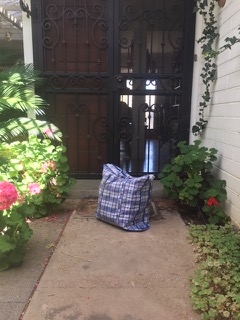
Since we postponed face-to-face sales of weavings from Maya cooperatives in Chiapas in March, Weaving for Justice has been selling their work through remote means and occasionally to someone in our Las Cruces community by leaving a package on their patio.

During the first week of this new selling experience I thought I had contracted the Coronavirus. While I was waiting for my test results (they came back negative) other members of our Steering Committee took over filling Instagram orders.

Initially, to pass this task on to others I left things they needed near their front doors or on their patios. On one occasion when I dropped some mailing envelopes off to Susan Beck she followed up with an email saying that our exchange reminded her of how the people of a village North of London survived the plague in 1665.

The Rector came up with a plan to save the village by asking the people to seal themselves off from the outside world. In return, he saw that they were provisioned through the aid of an Earl living some miles distant. The plan was for food, fuel, and medicines to be brought by cart and left at a Boundary Stone at the edge of the village. Anyone wishing to purchase other items could leave coins in holes carved into the rock and filled with vinegar.


This true story is told in Year of Wonders, a novel by Geraldine Brooks. Both Susan and I read and loved this book. After Susan reminded me of the boundary stone I came to see it as a metaphor for how Weaving for Justice has been trying to help the weavers in Chiapas make it through this pandemic.

For example, each time I open up our Instagram page I think of it as a Boundary Stone. There Meghann Dallin, a Steering Committee member, virtually leaves beautiful textiles. While not essential items like flour and salt, when sold these textiles are transformed into cash that goes directly to the weavers to purchase corn and other necessities.

I have also come to see friends’ patios and gardens as Boundary Stones. There I’ve left bags of huipiles (blouses) for them to take into their homes, where they model them while a family member takes their photo. Afterwards, they put the bag back on the patio for me to pick up. Photos of these friends in huipiles from Chiapas grace our Instagram and Facebook pages.

On behalf of the Weaving for Justice Steering Committee: Thank you to everyone who has given of their time, money, and good wishes to help the weavers with whom we work to live with dignity and safety during this difficult and strange time.

Books as Bridges

Books as Bridges


This essay was originally published by Powells.com and appeared in October 2019 on https://www.powells.com/blog

“Books don’t matter to us. What matters is that our children don’t get enough to eat and get sick and die.”

I don’t remember exactly when Flor de Margarita Pérez Pérez said this to me, but I remember how it made me feel: that, as an anthropologist and writer, I had little to offer her and her community.

I arrived at Margarita’s house in Chenalho’, Chiapas, Mexico, in February 1987. Though I love to read, I had only brought a few books with me. While studying Tsotsil, my host family’s language, I would look up from my dictionary to the corn crib in the room and compare it to my bookshelf at home. Like my books, corn cobs were neatly stacked in rows from floor to ceiling. They had been harvested by Antonio, Margarita’s husband. They were the fruit of his labor in the corn and bean fields. Margarita’s job was to take the dried ears of corn and transform them into tortillas, corn gruel, and, for special occasions, tamales.

Corn cobs also embodied a form of ancestral knowledge about how to plant, care for, and harvest corn, knowledge Antonio had learned from his father. In that way they were like my bookshelf, a source of wisdom handed down from previous generations.

At Margarita’s, I became accustomed to eating mostly corn, beans, squash, and an occasional piece of fruit. Well before the end of the year, what little corn remained was riddled with bugs. The bananas the couple grew went to market, as did most of the eggs their hens produced, to earn the cash to buy corn and beans. I heard stories of different kinds of hunger. Margarita told me that Black Hunger was the worst — when the corn crop failed and people had to grind up the roots of plants to make tortillas and fill them with greens, the food of animals, not of humans.

After 13 months in Chiapas, I returned to the U.S. to write my dissertation. Before my departure, an anthropologist friend, Graciela Freyermuth Enciso, cautioned me: “You better not be like those American anthropologists who come to Mexico and do their investigations and then go back home and never return their writing to us in Spanish.”


It became clear to me that writing was my cargo, my service to this community.


Graciela’s words stayed with me and encouraged me to make my academic work available in Spanish. Although I gave these books to my compadres, I had finally accepted that writing about their lives was not a way they saw me helping them and their community in the late 1980s and early 1990s.

Then, in 1994, the Zapatista uprising occurred and things changed on many fronts. When representatives of the movement came to their community, Antonio and Margarita recognized the struggle as their own. After decades of protests and demonstrations, it was finally time to stand up to the Mexican government and hold it accountable for its centuries of neglect of the original peoples of Mexico. For example, at the time of the uprising, 55% of the nation’s hydroelectric power came from Chiapas, while only one-third of homes in Chiapas had electricity.

I began to write from my compadres’ and their friends’ perspectives about the dramatic changes that joining the Zapatista movement entailed. I brought my writings back to them and explained that with these I was telling people in my country and elsewhere about what they were trying to accomplish. They seemed to understand that this writing was helpful.

But all along they gave me much more than I gave them. They taught me how to live and work in a collective way. In their community each person depended upon others in profound ways. Reciprocity and borrowing formed the basis of social life. Houses went up with kinsfolk and neighbors helping each other. After the Zapatista uprising, cooperatives became an important way to construct an alternative to the government’s top-down economic development policies.

Before coming to highland Chiapas, I had only read about cargos, services that people take on for their community, usually for life and often without remuneration. Healers, midwives, and leaders of prayers in sacred places took on such cargos for life. More recently, representatives in artisan cooperatives and in the Zapatista movement assume them for shorter periods.

It became clear to me that writing was my cargo, my service to this community. Eventually, I received another cargo from Margarita in which I could help her people more concretely — assisting weavers in her community to sell their work through fair trade in the U.S. Over the years that work extended to working with two other artisan cooperatives in highland Chiapas and using my writing to educate people about the significance of their textile traditions.

I hadn’t been to visit my compadres for two years when I arrived in Chiapas in August 2019. On the first day of my visit, we got our book business out of the way: I paid Margarita for two years of royalties she had earned on the sales of her life story, about $133. Not much in the U.S., but quite a bit to her. In 2001, I had convinced Margarita to embark on a 10-year journey with me to tell her story. That book has three versions: an English one, a Spanish one, and one just for her family with the real names of everyone and their photos. When we prepared the public versions, we decided not to use her real name or photos of her or her family for fear of reprisals from her involvement in the Zapatista movement. After receiving copies of her personal book to give to her children, Margarita said that she is glad she told her life story so that her children can understand what her life has meant.

I also had news for Margarita about another book: my first novel. That book owed a lot to the work we did together on her life story. The abundance of material we generated didn’t all make it into her book. I sat on that material for several years until I realized that I could use some of it as a springboard to tell a story about a friendship between two Tsotsil women from Chenalho’. And so When a Woman Rises came into being.

Before I went to Chiapas, I hatched a wild plan to raise money to give away 2,000 copies of When a Woman Rises in Spanish to pueblos originarios (original peoples, what Mayas and other “indigenous” people prefer to be called) in Chiapas. I didn’t want to wait for a Mexican publisher to buy the translation rights to my book some day in the distant future, plus I knew that few pueblos originarios would have the money to buy the book if it were available in Spanish. Although some of them have read my other books in Spanish, when my novel came out I realized that I had finally written something that the people who made the book happen could enjoy reading, and in doing so be reminded of the creative spark they carry within themselves.

When I was in Chiapas, I talked about my idea to make free copies of my novel in Spanish available with about a dozen organizations. A few are run by pueblos originarios who have been writing poems, stories, and novels in Spanish and in Mayan languages and could have resented me for seeking support for my writing instead of theirs. But instead, I received their gratitude and encouragement. One told me they plan to use multiple copies of my novel in reading circles. Another suggested that literate women and men can read the book out loud to their parents and grandparents who don’t read.

Books still do not matter to Margarita as much as the struggle to sustain her family and community. But I think she sees the bridge that books can build between her people and the world. I hope that my novel will inspire pueblos originarios to write their own novels and be a mirror reflecting their valuable collective knowledge and practices.


A Sacred Encounter

12 February 2019

Since my first novel, When a Woman Rises, was released on September 10th I’ve had the opportunity to do readings in places as different as the English Bookshop in Uppsala Sweden and the Casa Camino Real, a bookshop on the old royal road between Mexico City and Santa Fe. At each reading I’ve felt the power of novels to reach people in ways that non-fiction often has less success. But one occasion in particular stands out to me.

It was an evening in November 2018 and I had just finished reading to a small gathering of university students. They seemed engaged and gave me a generous applause when I finished. As they began to talk and look at the table of books and some textiles from Chiapas, a young woman with long black hair came toward me. She pulled up a chair and sat down, as if she had something to say that might take a while. I sat down, too, and leaned in to listen carefully as her voice was quiet and serious.

First she introduced herself as Navajo. Then she told me that like Lucia in my novel she has had dreams calling her to serve her people as a medicine woman. She talked about the spirit beings and the four sacred mountains of the Diné people that had come in her dreams to teach her. She mentioned that her father and brother were spiritual people, but they were back home on the reservation and she was really afraid of what her dreams mean in her life. Then she said that when she heard me read how Lucia, another native woman of the Americas, had a dream to be a healer she felt less afraid and relieved not to be alone.

A few people were waiting for me to sign their books and I couldn’t give the young woman the attention she deserved. So I gave her my card and asked her to call me so we could talk more. Later she came with a copy of my book for me to sign. Then she asked for a photo of us together and I asked for one of us, too.

On the way home that night I thought that perhaps this is what happens when one writes a novel. You have to be ready for sacred encounters. I feel blessed to have had such an encounter and to know that Lucia’s story has encouraged a Navajo woman on her spiritual path. Driving home that night I felt as if all along I was writing my novel for this one young woman and that if no one else reads it, it will have served its purpose.

P.S. I didn’t use the young woman’s name here because I’m still waiting for her to call. If I hear from her and she agrees, I’ll acknowledge her in a future blog post.


“Do tortillas really fall from heaven in Chiapas?”

About a month ago I was in Anapra, Juárez, Mexico to show “Maya Faces in a Smoking Mirror” at The Corpus Christi Catholic Church. The church is a humble one in a colonia of Juárez that has seen its share of violence over the years. But the people of this community have demonstrated more than their share of creative resistance to violence and repression. Community organizer, Cristina Coronado, invited me to show the film to members of the parish and surrounding community so they could learn about how fellow Mexicans in a distant state are also resisting and struggling for better lives for themselves and future generations.

I went with my friends Sally Meisenhelder and Sarah Murphy of Weaving for Justice. Crystal Massey had hoped to go with us but she couldn’t come at the last minute due to working day and night in El Paso with volunteer lawyers trying to reunite refugee families separated at the border by ICE. Our trip to Juárez was a joyful moment during a time of much trauma and grief just across the border in El Paso.

Father Bill Morton, the priest at The Corpus Christi Catholic Church, hasn’t been at the parish very long but he has a long history of fighting alongside the people of Juárez for social justice and has already done many things to raise the consciousness of his parishioners. Cristina and Padre Bill hoped that seeing the film would deepen people’s awareness of a different group of fellow Mexicans struggling in their own ways for better lives.

About 45 people attended the film showing, including several children.  Before the film, Sarah had the idea to give the children tiny felted turtles that Weaving for Justice members sell from Mujeres Por La Dignidad (Women for Dignity), a Zapatista weaving co-op in Chiapas. The turtles were a big hit. We told the children that they were made by Maya women from Chiapas with their own hands. After the film, Father Bill came back to the turtles and asked the children, “Where are the turtles made — in China?” “No!!,” one of the boys corrected him, “In Chiapas!”  Then father Bill asked if they were made on a machine and a few children yelled out, “No! By hand!”  This exchange gave me the idea to pass around a couple tote bags which still smell of smoke from the fires where they were dried before being shipped to us. As the kids buried their noses in the smoky cloth their eyes lit up with understanding. They had already seen in the film how Claudia, a single mother, washed her 3 year-old son Berlin’s clothes. Now they could smell the fire that dried the clothes and weavings for sale. During the film the children giggled while their parents chuckled at the scene of Claudia and Berlin walking home hand-in-hand from the water hole, Berlin’s pants just barely covering his bottom.

We had more comments than questions at the end of the film. A few people commented on how many people in Chiapas grow their own food and have a close connection to the earth, unlike in Juárez, where they have to buy everything. They also talked about how the people in Chiapas try to protect mother earth, while in Juárez they feel disconnected from her. People commented about how many Maya people still have their language and culture and are defending these and that this shared heritage helps them organize.  We talked about how they, too, are struggling in Anapra to build a strong community and defend it. We talked about how resistance is not only external, but internal, that it is strengthened by one’s faith and love for others.

There were some tears. Sofia Alemán, one of the founders of the prayer flag group was moved that she had heard about the women from Chiapas through La Frontera, a fair trade store in Las Cruces, New Mexico where her prayer flag group sold their flags, but until she saw the film she hadn’t understood how the women in Chiapas live, the many difficulties they face.

The highlight of the day for me was question from a little boy about 6 years old. He was prompted to ask it by something I told the audience about an image in the film of corn kernels falling from the sky. I spoke about the different reactions I received from friends in the US and Mexico to this reoccurring image. Some of my US friends thought the image was too contrived and that Bill Jungels, the film’s director, should cut it. But when I showed the film in June 2017 in Chiapas to participants in the film they all felt that the falling corn image was very good. Two participants, Cristóbal and Davíd, both Catholic Catechists from Chenalho’, gave me a compelling explanation for why the image works — because God inspired Bill to use this image to show that all food comes from God who is in Heaven. After he spoke, Davíd said, “Uncle, remember in the Bible in Exodus it says that when Moses was guiding the Israelites through the desert and they were hungry and thirsty and complaining to him, he asked God to send them food and God sent them manna vaj.”

I was delighted to hear Davíd say “manna vaj” instead of just manna. Vaj is the Tsotsil word for tortilla, the staff of life in Maya communities. Although no one knows exactly what manna consisted of, the Israelites were said to have made a sort of round bread out of it, not unlike tortillas. Through his training as a catechist, Davíd has learned how to interpret Biblical teachings in the context of his own language and culture.

After I told this story to the audience in Anapra, the little boy put up his hand and asked me, “Do tortillas really fall from heaven in Chiapas?” I couldn’t understand him at first, but when I did I was delighted, like everyone else. I was impressed that this little boy and the other children sat patiently throughout the hour and 17 minute film, and as the boy’s question suggests, he paid attention!

After the film discussion, Cristina invited the women of both Junt@s Vamos, a cancer support group in Juárez, and Guerilla Prayer Flags, a group in Anapra that makes prayer flags, to speak about their work together.

We ended the gathering with a convivio with fruit, coffee, and delicious Mexican pastries. To show their solidarity with the weavers in Chiapas, a few people bought little turtles and other small woven pieces that we had brought with us and Padre Bill explored with me taking a delegation from the parish to Chiapas. I’d love to help him make this happen so he and his parishioners could meet our friends in the film, especially Cristóbal and Davíd and their spiritual mentor, Padre Marcelo, a former priest in Chenalho’, who like Padre Bill, received death threats due to his community organizing against corruption and exploitation.

– Christine Eber, 16 August 2018

Refugee hospitality on the US/Mexico border

10 July 2018

Tonight I’m volunteering in the donated clothing room at Peace Lutheran Church in Las Cruces, New Mexico, helping mothers from Central America find clothes to replace the clothing they crossed the border in. I immediately realize that the women’s ankle monitors present a problem. My friend Mary and I try to help them find pants that are loose at the ankle, but the women want to wear clothes that make them feel attractive, not stretched-out sweat pants that no one wants anymore. So, Mary takes scissors to the seam of a pair of jeans a woman has chosen and we hope she can get it over her leg after she takes a shower.

I’m grateful for this chance to help these mothers recover a small part of their humanity that was stripped from them in detention and to remember how important clothing is to identity.

While helping the women, I am reminded of a Triqui grandmother who fled paramilitary violence in Oaxaca several years ago. She was placed in a jail in El Paso where she was forced to wear a blue jumpsuit (blue indicates low security risk, yellow medium, and red high). In the following weeks, she became increasingly stressed without the wide belt that she was accustomed to wearing to hold up her traditional skirt. But the guards wouldn’t let her wear her belt over her jumpsuit. They probably thought she might try to hang herself with it.

Living for a year in1987 in Margarita’s home in a Maya community in Chiapas, I followed Margarita’s example and slept in my huipil and skirt and only loosened my wide cumberband a little. I don’t think that Margarita ever loosened her belt at night. It had become a part of her body’s armature, giving her a sense of security and comfort.

Now I only wear loose clothing, but that year of learning about dress and identity in Chiapas helps me understand the Triqui woman and the young mothers from Central America.

11 July 2018

This morning after the women and their children have eaten their first good breakfast in who knows how long, Mary and I go through the tubs of mostly large, unfashionable blouses and start a special tub of the smallest and prettiest blouses.

Later this month when the next group of refugee mothers arrive at Peace Lutheran we will go to that tub to find blouses that make them feel attractive on the buses and airplanes that will carry them to their host families.

We wish them Godspeed on this next step toward a better life for themselves and their children.

Christine Eber

This photo of Margarita putting on a belt over her skirt appears in Our Clothing/K’utik/Nuestra Ropa, a book in English, Tsotsil, and Spanish produced by weavers in Tsobol Antsetik of San Pedro Chenalho’, Chiapas. The book is available for purchase at http://weaving-for-justice.org/online-store-books-for-sale/

In response to the crisis on the border, members of the Weaving for Justice steering committee are doing what they can. Crystal is helping lawyers reunite parents and children separated at the border. Christine, Mary, and Sarah, of our steering committee are volunteering with refugee hospitality at Peace Lutheran Church in Las Cruces. To donate to this effort at Peace Lutheran Church go to Amazon.com and find Wish List for Border Servant Corps. To donate to Annunciation House, one of the four NGOs in the U.S. currently receiving reunited parents and children and then sending them to area shelters in El Paso and Las Cruces, including Peace Lutheran, please go to this link: https://annunciationhouse.org/financial-donations/ Your donation to Annunciation House can also be sent in the form of a check made out to Annunciation House and sent to: Annunciation House, 815 Myrtle Avenue
, El Paso, Texas 79901.